

The concept of an ecological niche is fundamental in ecology because it explains how different species survive and coexist in nature. An ecological niche includes all the environmental conditions, resources, and interactions necessary for a species to live, grow, and reproduce. It is often described as the "way of life" of a species within its ecosystem.
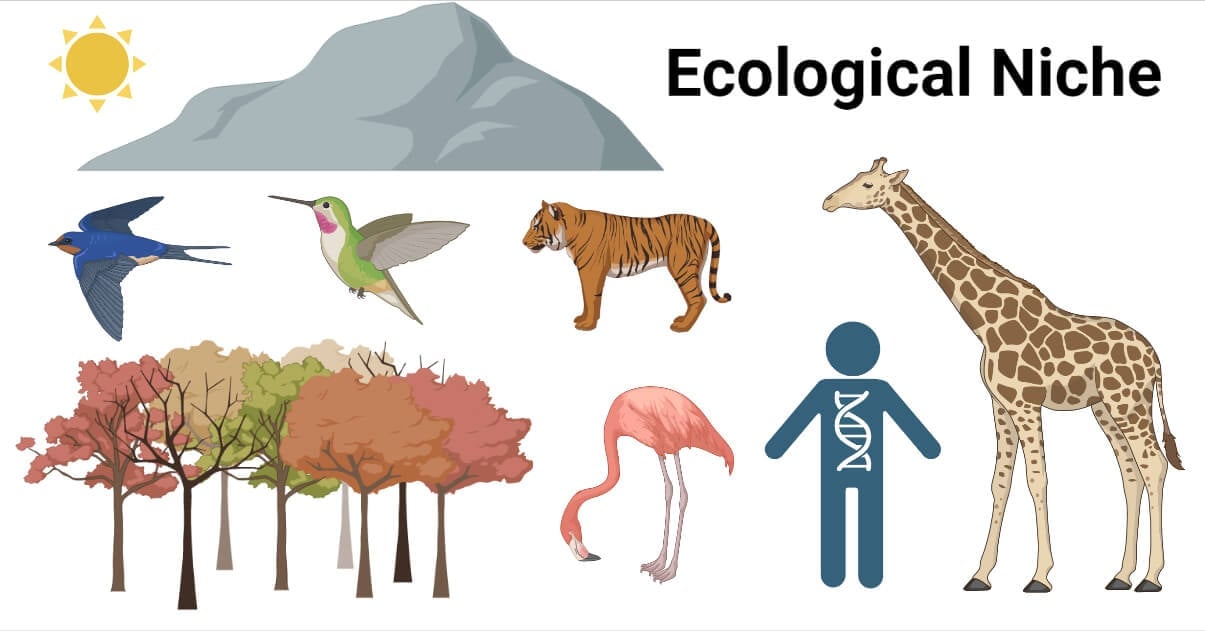
An ecological niche includes several factors such as the habitat where the organism lives, the food it consumes, the time of day it is active, its reproductive behavior, and its relationships with other organisms. These factors determine how a species uses available resources and contributes to ecosystem functioning.
Every species has its own ecological niche. For example, a bee occupies the niche of a pollinator because it feeds on nectar and pollen while helping flowering plants reproduce. A lion occupies the niche of a top predator by hunting herbivorous animals and regulating their populations. Earthworms occupy the niche of decomposers by breaking down organic matter and improving soil fertility.
Ecologists distinguish between the fundamental niche and the realized niche. The fundamental niche represents the full range of environmental conditions under which a species can survive and reproduce. The realized niche is the actual niche occupied by the species after considering competition, predation, and other ecological interactions.
Competition occurs when two species attempt to use the same limited resources. According to the competitive exclusion principle, two species cannot occupy exactly the same ecological niche indefinitely. One species may outcompete the other, or both may adapt by using different resources or habitats.
Ecological niches play a vital role in maintaining biodiversity and ecosystem stability. By occupying different niches, species reduce competition and contribute to the efficient use of available resources. This specialization allows many species to coexist within the same ecosystem.
Human activities can alter ecological niches through habitat destruction, pollution, climate change, and the introduction of invasive species. Such changes may force organisms to adapt, migrate, or face extinction if suitable conditions are no longer available.
Understanding ecological niches helps scientists study species interactions, ecosystem functioning, and biodiversity conservation. It also provides valuable information for managing natural resources and protecting endangered species.
Conclusion
An ecological niche represents the role, function, and way of life of a species within its environment. It includes all the conditions and resources required for survival and reproduction. Ecological niches are essential for understanding biodiversity, species interactions, and the balance of ecosystems.
Laisser un commentaire
Votre adresse e-mail ne sera pas publiée. Les champs obligatoires sont marqués *