

1. Introduction
Biology has entered a new era with the development of gene-editing technologies. Among these technologies, CRISPR has emerged as the most powerful and widely used tool. It enables scientists to edit genes quickly, accurately, and at a relatively low cost.
The discovery of CRISPR has transformed the way researchers study living organisms and has opened possibilities that were once considered science fiction.
2. What is CRISPR?
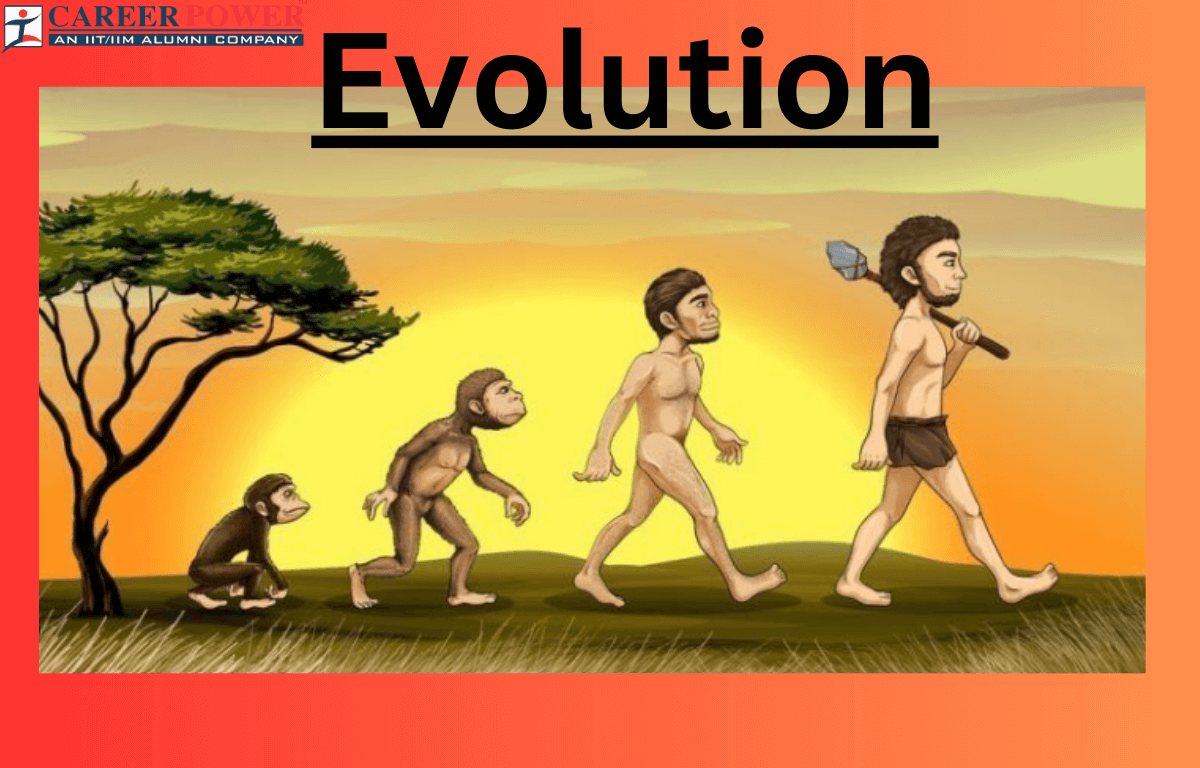
Origin of Life
Genetic Mutation: The Source of Biological Diversity and Evolution
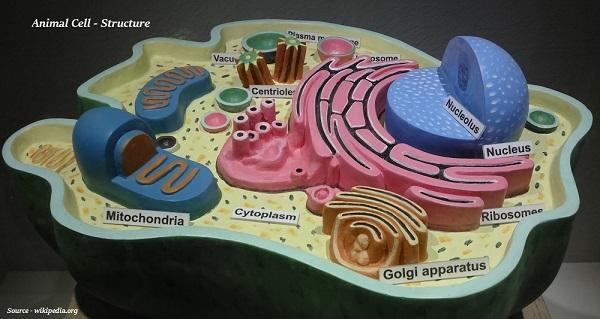
The Cell: The Fundamental Unit of Life
CRISPR: The Revolutionary Gene-Editing Technology Transforming Biology
A New Preventive Medicine Shows Nearly 100% Effectiveness with Just Two Injections Per Year
Ebola: International Leaders Call for Stronger Global Response
A New Preventive Medicine Shows Nearly 100% Effectiveness with Just Two Injections Per Year

Ebola: International Leaders Call for Stronger Global Response

Why Ebola Has Not Been Completely Eliminated
European Union Pledges More Support as Ebola Continues to Affect Central Africa
Bunia Faces New Ebola Outbreak as Response Efforts Intensify Small intro:
Ebola Outbreak Continues to Challenge Health Authorities in Central Africa
Origin of Life
Genetic Mutation: The Source of Biological Diversity and Evolution
The Cell: The Fundamental Unit of Life
Radioactivity: The Invisible Energy from Atomic Nuclei
How the Body Reacts to Danger: The Two Stress Hormones
Thermodynamics
Origin of Life
Genetic Mutation: The Source of Biological Diversity and Evolution
CRISPR: The Revolutionary Gene-Editing Technology Transforming Biology
A New Preventive Medicine Shows Nearly 100% Effectiveness with Just Two Injections Per Year
Radioactivity: The Invisible Energy from Atomic Nuclei
Thermodynamics
CRISPR stands for Clustered Regularly Interspaced Short Palindromic Repeats.
It is a natural defense mechanism used by bacteria to protect themselves from viruses. When a virus attacks a bacterium, the bacterium stores small fragments of the viral DNA within its own genome. These fragments act as a genetic memory of past infections.
If the same virus attacks again, the bacterium can recognize and destroy it.
Scientists discovered that this natural system could be adapted as a powerful gene-editing tool3. Discovery of CRISPR
The first unusual DNA sequences related to CRISPR were observed in bacteria during the late twentieth century.
Researchers gradually discovered that these sequences were part of a microbial immune system.
A major breakthrough occurred when scientists demonstrated that CRISPR could be programmed to cut DNA at specific locations.
This discovery revolutionized molecular biology and earned international recognition.
4. How CRISPR Works
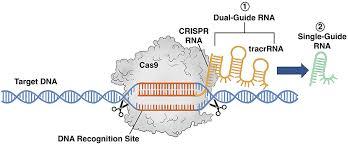
CRISPR functions through two main components:
Guide RNA
The guide RNA is designed to match a specific DNA sequence. It guides the system to the target gene.
Cas9 Protein
Cas9 acts like molecular scissors. Once directed by the guide RNA, it cuts the DNA at the selected location.
After the cut is made, scientists can:
- Remove a gene.
- Insert a new gene.
- Correct a mutation.
- Modify existing DNA sequences.
This process allows precise genetic engineering.
5. Importance in Molecular Biology
CRISPR has transformed biological research.
Before its development, gene modification was expensive, slow, and technically difficult.
CRISPR offers:
- High precision.
- Low cost.
- Rapid results.
- Broad applicability.
As a result, laboratories worldwide now use CRISPR as a standard research tool.
6. Medical Applications
One of the most exciting uses of CRISPR is in medicine.
Treatment of Genetic Diseases
Many diseases result from mutations in a single gene.
Examples include:
- Sickle cell disease.
- Cystic fibrosis.
- Hemophilia.
- Muscular dystrophy.
CRISPR may allow direct correction of these mutations.
Cancer Therapy
Scientists are modifying immune cells to better recognize and destroy cancer cells.
Viral Diseases
Researchers are studying CRISPR-based approaches against:
- HIV.
- Hepatitis B.
- Other viral infections.
Personalized Medicine
CRISPR could enable treatments tailored to each individual's genetic profile.
7. Applications in Agriculture
Agriculture benefits greatly from CRISPR technology.
Scientists can develop crops with:
Disease Resistance
Plants become more resistant to fungi, bacteria, and viruses.
Drought Tolerance
Improved crops can survive water shortages.
Increased Productivity
Crop yields can be increased to feed growing populations.
Improved Nutritional Value
Scientists can enhance vitamins and nutrients in foods.
These improvements contribute to global food security.
8. Applications in Animal Science
CRISPR is also used in animal research.
Scientists are developing animals with:
- Improved disease resistance.
- Faster growth rates.
- Enhanced productivity.
In biomedical research, genetically modified animals help scientists study human diseases.
9. Applications in Microbiology
Microorganisms play essential roles in biotechnology.
Using CRISPR, researchers can modify bacteria and yeast to:
- Produce medicines.
- Manufacture biofuels.
- Generate industrial enzymes.
- Improve food production.
These applications have major economic and scientific value.
10. CRISPR and Biotechnology
Biotechnology companies are investing heavily in CRISPR research.
Potential products include:
- New medicines.
- Diagnostic tools.
- Improved crops.
- Industrial microorganisms.
The biotechnology industry considers CRISPR one of the most promising technologies of the century.
11. CRISPR in Scientific Research
CRISPR helps scientists understand gene function.
Researchers can:
- Disable genes.
- Activate genes.
- Study mutations.
- Investigate biological pathways.
This knowledge advances genetics, medicine, physiology, and evolution.
12. Ethical Issues
Despite its benefits, CRISPR raises ethical concerns.
Human Embryo Editing
Editing embryos could permanently alter future generations.
Designer Babies
Some fear the possibility of selecting traits such as intelligence or physical appearance.
Social Inequality
Advanced genetic technologies may not be accessible to everyone.
Environmental Risks
Releasing genetically modified organisms into nature may have unforeseen consequences.
These concerns require careful regulation.
13. Technical Challenges
CRISPR is powerful but not perfect.
Challenges include:
Off-Target Effects
The system may accidentally modify unintended DNA regions.
Delivery Problems
Getting CRISPR into specific cells remains difficult.
Long-Term Effects
Scientists continue studying possible long-term consequences.
Ongoing research seeks to improve safety and precision.
14. CRISPR and Evolutionary Biology
CRISPR provides valuable insights into evolution.
Scientists use it to:
- Study gene evolution.
- Understand adaptation mechanisms.
- Investigate species diversity.
This helps explain how organisms evolve over time.
15. CRISPR and Conservation Biology
Conservationists are exploring CRISPR to help endangered species.
Potential applications include:
- Increasing genetic diversity.
- Improving disease resistance.
- Protecting threatened populations.
However, these applications remain experimental.
16. CRISPR and Infectious Diseases
CRISPR-based diagnostic tools can detect pathogens rapidly.
Scientists are developing tests for:
- Viral infections.
- Bacterial diseases.
- Emerging pathogens.
These tools may improve outbreak control and public health responses.
17. Future Perspectives
The future of CRISPR appears extremely promising.
Researchers expect advances in:
- Gene therapy.
- Cancer treatment.
- Agricultural improvement.
- Environmental management.
- Synthetic biology.
As technology improves, new applications will continue to emerge.
18. Impact on Society
CRISPR may profoundly affect society.
Potential benefits include:
- Longer life expectancy.
- Better healthcare.
- Improved food production.
- Reduced disease burden.
At the same time, society must address ethical, legal, and social challenges associated with genetic engineering.
19. Limitations of CRISPR
Although revolutionary, CRISPR cannot solve every biological problem.
Limitations include:
- Technical difficulties.
- Ethical restrictions.
- Regulatory requirements.
- Biological complexity.
Scientists emphasize responsible use of the technology.
20. Conclusion
CRISPR is one of the most important innovations in the history of biology. By enabling precise modification of DNA, it has transformed research, medicine, agriculture, and biotechnology. Its potential to treat diseases, improve food production, and advance scientific knowledge is enormous. As researchers continue to refine the technology, CRISPR is expected to play a central role in shaping the future of life sciences and improving human well-being worldwide.
اترك تعليقاً
لن يتم نشر عنوان بريدك الإلكتروني. الحقول المطلوبة مشار إليها بـ *